MEANINGFUL PARTICIPATION IN RELATION TO THE LADDER OF CITIZEN PARTICIPATION IN THE FORMATION OF LAWS
DOI:
https://doi.org/10.55292/2as4zs06Keywords:
Meaningful Participation, Ladder, Participation, LawAbstract
A good legislative process provides space for public participation in policy-making. The persistence of legal products that ignore public participation in their formation poses a problem for better legal development. The neglect of public participation in the legislative process certainly raises questions regarding the extent to which the government provides space for public participation. This study used a normative research method, with a statute approach and a comparative approach. The results indicate that there are eight levels to measure the extent of public participation in the legislative process. In Indonesia, public participation in the legislative process is expressly regulated in Article 96 of Law No. 13 of 2022. Not only Indonesia, but South Africa's constitution also provides space for public involvement in the legislative process. In the Indonesian context, the level of public participation in the legislative process is at the Delegated Power level. This is indicated by the existence of the House of Representatives (DPR) as the representative of the people. Therefore, policies created jointly by the DPR are, in principle, policies that fulfil the needs of public participation.
Downloads
Published
Issue
Section
License
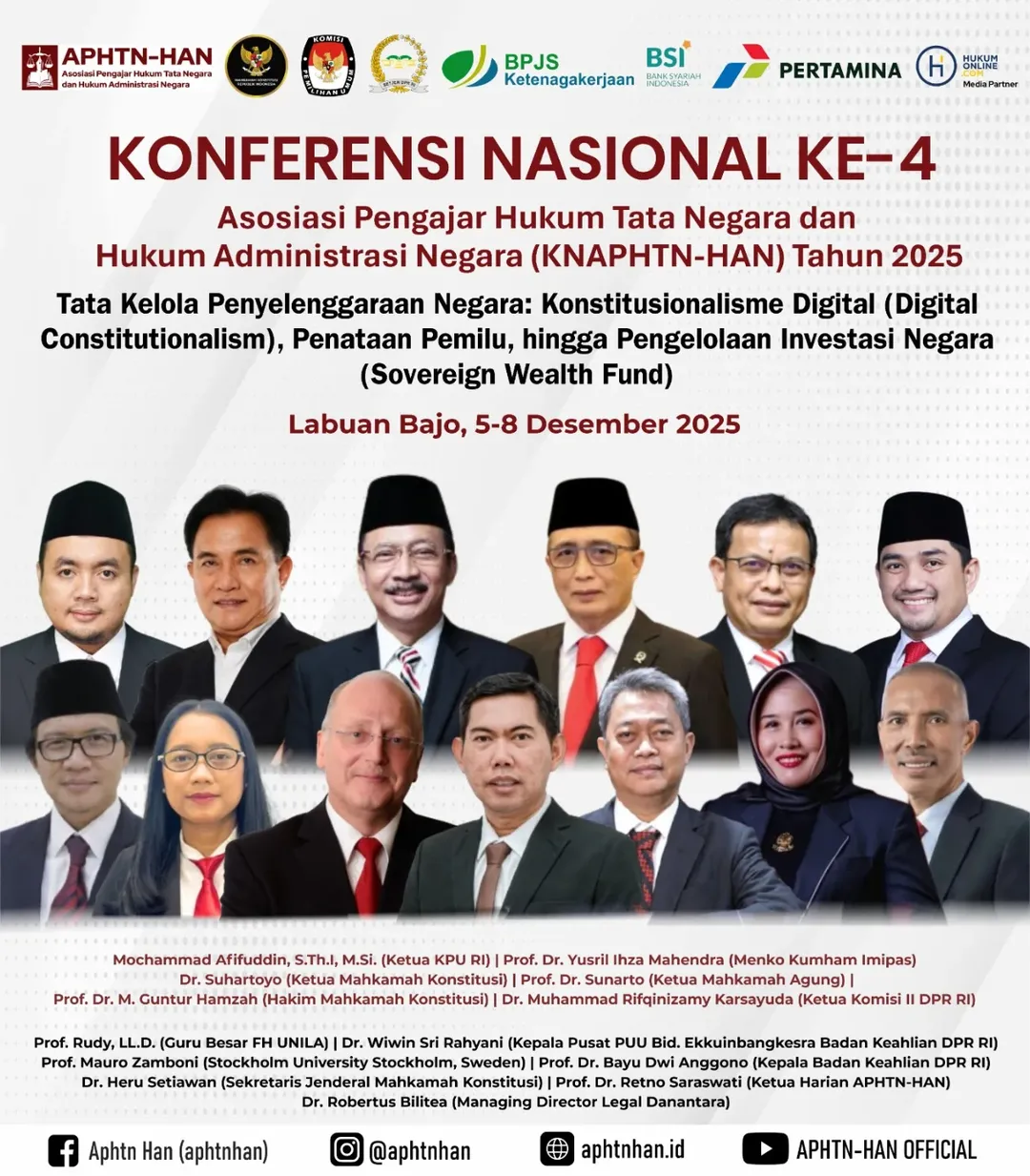
Copyright (c) 2025 Konferensi Nasional Asosiasi Pengajar Hukum Tata Negara dan Hukum Administrasi Negara

This work is licensed under a Creative Commons Attribution-NonCommercial-ShareAlike 4.0 International License.
All articles published in Proceeding APHTNHAN are licensed under the Creative Commons Attribution-NonCommercial-ShareAlike 4.0 International License (CC BY-NC-SA 4.0).
This license allows others to:
-
Share. copy and redistribute the material in any medium or format
-
Adapt. remix, transform, and build upon the material
Under the following terms:
-
Attribution. You must give appropriate credit, provide a link to the license, and indicate if changes were made.
-
NonCommercial. You may not use the material for commercial purposes.
-
ShareAlike. If you remix, transform, or build upon the material, you must distribute your contributions under the same license as the original.
More details about this license are available at: https://creativecommons.org/licenses/by-nc-sa/4.0/
Authors retain the copyright of their work and grant Proceeding APHTNHAN the right of first publication with the work simultaneously licensed under the CC BY-NC-SA 4.0 license.






 © 2025 Proceeding APHTN-HAN