THE PUBLIC’S RIGHT TO PARTICIPATE IN REGIONAL LAWMAKING: LESSONS FROM INDONESIA’S DECENTRALIZED GOVERNANCE
DOI:
https://doi.org/10.55292/q7wdrw38Keywords:
Public Participation, Regional Legislation, Regional Autonomy, Democratic GovernanceAbstract
This paper examines public participation in regional legislation within Indonesia’s decentralization framework, focusing on regulatory provisions, practical challenges, and strategies to enhance citizen engagement. While the 1945 Constitution and supporting laws, including Law No. 23 of 2014 on Regional Government and Law No. 12 of 2011 on Lawmaking, formally guarantee public involvement, implementation remains uneven. Structural and institutional barriers, limited legal literacy, transparency deficits, and elite-dominated practices often restrict meaningful engagement, resulting in a gap between normative provisions and practical realities.
To address these challenges, the study highlights a range of strategies, including regulatory refinement to institutionalize accountability, capacity-building within regional legislatures and executives, utilization of digital platforms to broaden access, and civic education initiatives to empower citizens. Embedding participatory monitoring mechanisms throughout the legislative process is also essential to ensure sustained and substantive engagement. The findings underscore that effective public participation is not merely a procedural formality but a democratic imperative. Enhancing citizen involvement strengthens the legitimacy of regional legislation, reinforces accountability, and aligns Indonesia’s decentralization system with principles of inclusivity, transparency, and responsive governance
Downloads
Published
Issue
Section
License
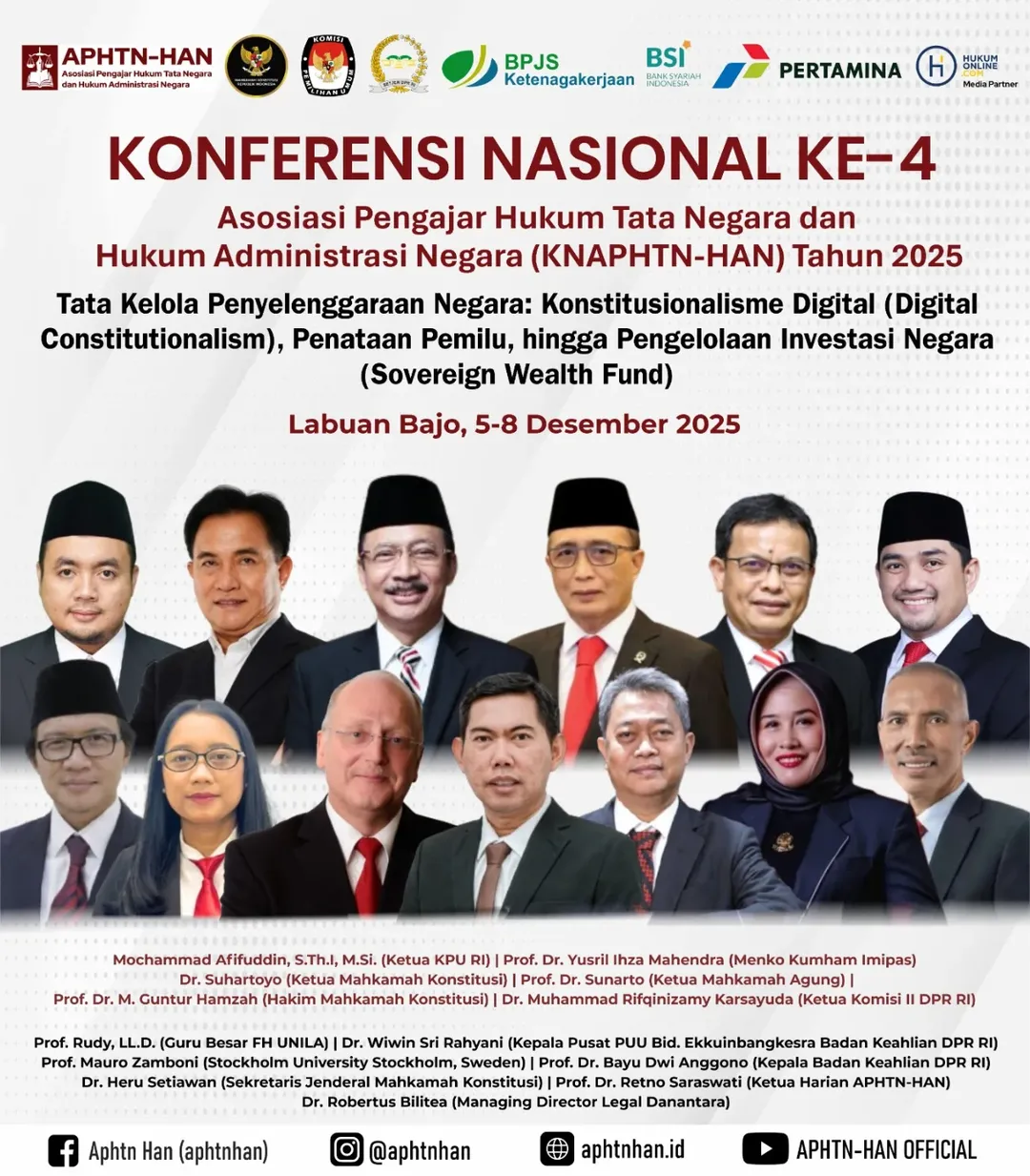
Copyright (c) 2025 Konferensi Nasional Asosiasi Pengajar Hukum Tata Negara dan Hukum Administrasi Negara

This work is licensed under a Creative Commons Attribution-NonCommercial-ShareAlike 4.0 International License.
All articles published in Proceeding APHTNHAN are licensed under the Creative Commons Attribution-NonCommercial-ShareAlike 4.0 International License (CC BY-NC-SA 4.0).
This license allows others to:
-
Share. copy and redistribute the material in any medium or format
-
Adapt. remix, transform, and build upon the material
Under the following terms:
-
Attribution. You must give appropriate credit, provide a link to the license, and indicate if changes were made.
-
NonCommercial. You may not use the material for commercial purposes.
-
ShareAlike. If you remix, transform, or build upon the material, you must distribute your contributions under the same license as the original.
More details about this license are available at: https://creativecommons.org/licenses/by-nc-sa/4.0/
Authors retain the copyright of their work and grant Proceeding APHTNHAN the right of first publication with the work simultaneously licensed under the CC BY-NC-SA 4.0 license.





 © 2025 Proceeding APHTN-HAN