The Legal Challenges to Implement Treaties in The Democratic State: A Contextual of Indonesia
DOI:
https://doi.org/10.55292/1asw2329Keywords:
treaties, democratic state, international relationsAbstract
International relations is a multifaceted field that examines the interactions between various actors on the global stage. The ratification of international treaties poses significant legal and democratic challenges that can impede effective international cooperation into national action. This essay will discuss the legal challenges in the implementation of treaties in the democratic state in Indonesia. In the ratification (internal process), the roles to check and balance towards the government action in the result of negotiation in the international forum may be filtered before applying the rights and obligations to the national legal system. The aim of this essay will discuss the legal challenges to apply the legal provision of treaties in the national legal system as the transformation process and the implementation need to follow the democratic state requirement constitutionally. This essay investigates the practice of Indonesia in implementing its rights and obligations in the international forum, the position of treaties under the national legal system, and the challenges to implement treaties to be accepted to the public. This essay uses doctrinal and normative legal research, and uses the conceptual approach to analyse the discussion. The result of this essay shows that the legal challenges appear when the implementation of democratic principle limits the executive powers action, which influences the implementation of international provisions as long as the limitation is considered as not relevant to democratic principles which are constitutionally recognised.
Downloads
Published
Issue
Section
License
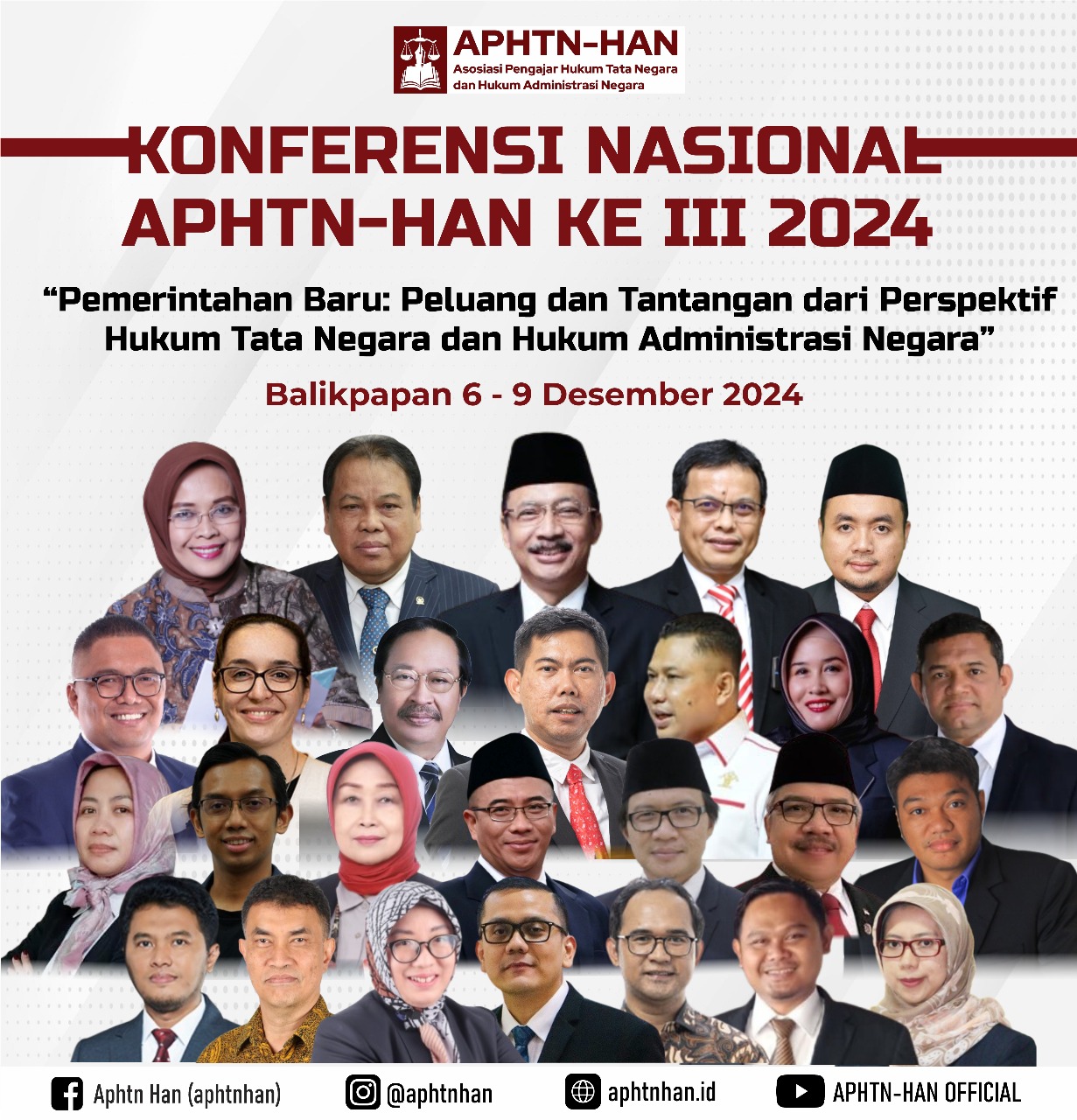
Copyright (c) 2024 Konferensi Nasional Asosiasi Pengajar Hukum Tata Negara dan Hukum Administrasi Negara

This work is licensed under a Creative Commons Attribution-NonCommercial-ShareAlike 4.0 International License.
All articles published in Proceeding APHTNHAN are licensed under the Creative Commons Attribution-NonCommercial-ShareAlike 4.0 International License (CC BY-NC-SA 4.0).
This license allows others to:
-
Share. copy and redistribute the material in any medium or format
-
Adapt. remix, transform, and build upon the material
Under the following terms:
-
Attribution. You must give appropriate credit, provide a link to the license, and indicate if changes were made.
-
NonCommercial. You may not use the material for commercial purposes.
-
ShareAlike. If you remix, transform, or build upon the material, you must distribute your contributions under the same license as the original.
More details about this license are available at: https://creativecommons.org/licenses/by-nc-sa/4.0/
Authors retain the copyright of their work and grant Proceeding APHTNHAN the right of first publication with the work simultaneously licensed under the CC BY-NC-SA 4.0 license.






 © 2025 Proceeding APHTN-HAN