THE INFLUENCE OF REGIONAL HEAD NOMINATION THRESHOLD ON ELECTORAL JUSTICE AND THE IMPLICATION OF SINGLE CANDIDATES ON QUALITY OF LOCAL DEMOCRACY
DOI:
https://doi.org/10.55292/cc2t2j66Keywords:
Local Democracy, Regonal Heads Elections, Single CandidateAbstract
This study examines the influence of the threshold for the candidacy of regional heads on electoral justice and the implications of the emergence of a single candidate on the quality of local democracy. The nomination threshold is implemented as a mechanism to screen candidates to meet certain criteria of political support. However, the application of the threshold that are too high has the potential to cause electoral injustice by limiting the participation of alternative candidates, which then contributes to the phenomenon of single candidates. This condition threatens the quality of local democracy because it eliminates choice for voters and lowers the legitimacy and accountability of government. This study uses a juridicial normative approach by analyzing key regulations such as Law Number 10 of 2016 concerning the Election of Regional Heads, General Election Comission Regulations, and Law No. 7 of 2017 concerning General Elections. The result of the study show the need to review the candidacy threshold policy to be in line with the priciples of inclusive democracy and electoral justice in order to improve the quality of local democracy.
Downloads
Published
Issue
Section
License
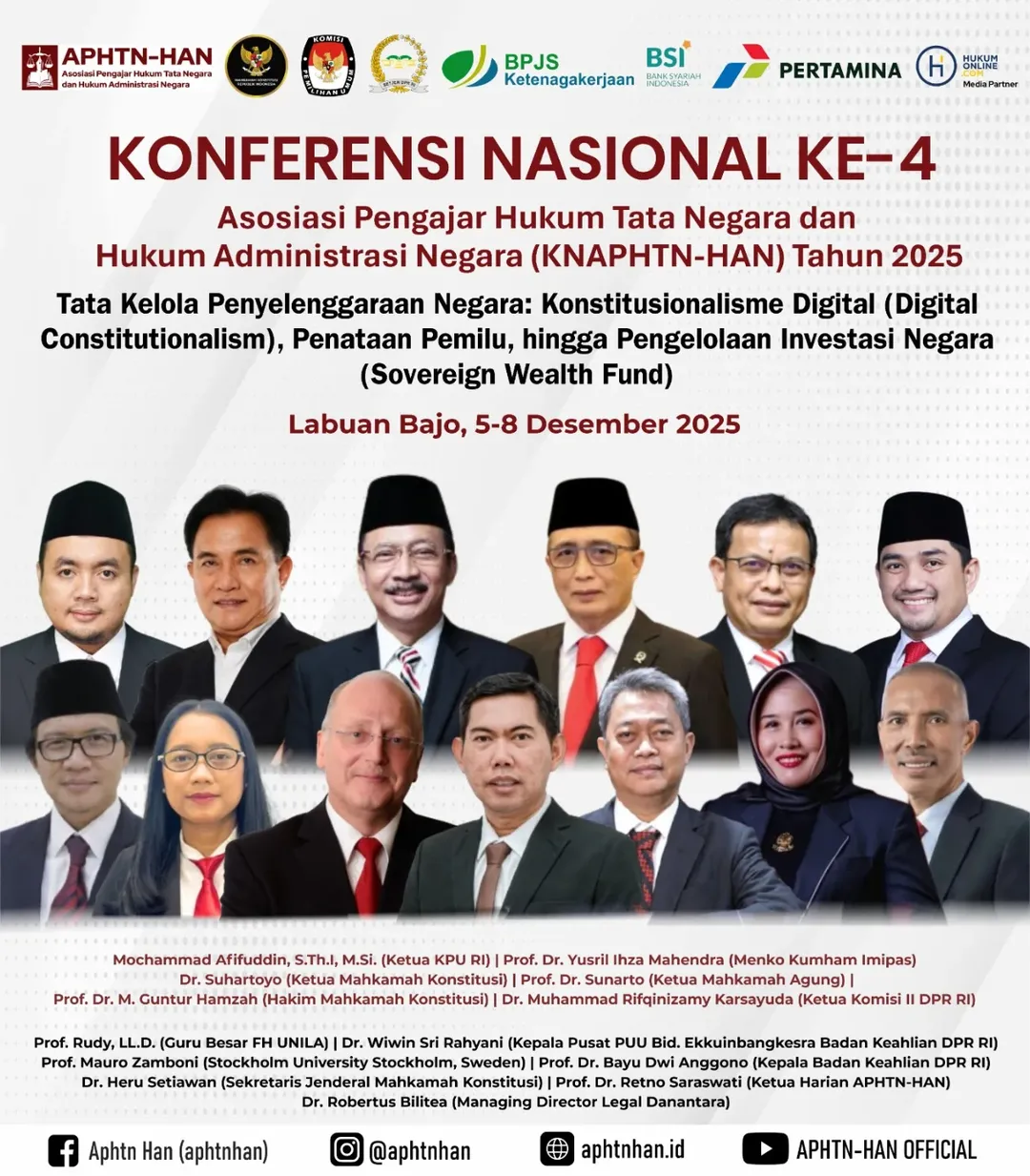
Copyright (c) 2025 Konferensi Nasional Asosiasi Pengajar Hukum Tata Negara dan Hukum Administrasi Negara

This work is licensed under a Creative Commons Attribution-NonCommercial-ShareAlike 4.0 International License.
All articles published in Proceeding APHTNHAN are licensed under the Creative Commons Attribution-NonCommercial-ShareAlike 4.0 International License (CC BY-NC-SA 4.0).
This license allows others to:
-
Share. copy and redistribute the material in any medium or format
-
Adapt. remix, transform, and build upon the material
Under the following terms:
-
Attribution. You must give appropriate credit, provide a link to the license, and indicate if changes were made.
-
NonCommercial. You may not use the material for commercial purposes.
-
ShareAlike. If you remix, transform, or build upon the material, you must distribute your contributions under the same license as the original.
More details about this license are available at: https://creativecommons.org/licenses/by-nc-sa/4.0/
Authors retain the copyright of their work and grant Proceeding APHTNHAN the right of first publication with the work simultaneously licensed under the CC BY-NC-SA 4.0 license.






 © 2025 Proceeding APHTN-HAN